

Does Stress Cause Neck Pain?
Does stress cause neck pain? The short answer is no! At Beyond Therapy and Wellness, we like to say “contributes to” instead of “cause.” The casual way healthcare professionals throw around terms can lead to confusion and, worse still, ineffective treatment. Fortunately, our highly skilled therapists know how to dig deep and find the root cause of your neck pain, and this information helps you find relief!
Let’s discuss Nicole, a 40-something-year-old working mother of three. Nicole was used to being very active, balancing her work schedule with getting her kids to all the various activities and school functions that come with being a mom nowadays.
Her neck pain first started as a crick in the neck when she woke up one morning. As the day progressed from driving her kids around to sitting at her desk, she noticed turning her head became more difficult and painful, making focusing on work nearly impossible.
Nicole struggled to figure out why her neck started hurting and came to the conclusion that stress “must be” the culprit. The more pain and difficulty moving she had, the more convinced she was that stress was to blame.

Understanding Nicole’s Neck Pain
One of the most common things we hear from our patients is that their pain started for “no apparent reason.” Like Nicole, people will wake up with a crick in their neck or notice a stiffness turning when driving in the car. It is also common for people to notice tightness in their upper back and neck after a long day.
So, what is actually the source of the pain? In most cases, there is an issue with the neck joints or the neck muscles due to prolonged positions. Our neck joints don’t like remaining in any position for extended periods. In Nicole’s case, she first noticed her pain in the morning, which may have been related to her neck position while sleeping. It is also important to note that in Nicole’s case, the first sign of any issue was in the morning when she woke up, unrelated to stress.
As Nicole’s day progressed, her pain got worse. But this also was more likely related to how she held her neck while driving or sitting at her computer. In both cases, her posture, specifically how she held her neck, seems to have contributed to her pain. Prolonged sitting can lead to a forward head position, resulting in tension to soft tissue (i.e., muscles, tendons, and ligaments) or negative changes to our blood flow.
The muscles of our neck function best when we move them. So, holding her head in one position likely led to irritation of the muscles and affected her ability to move her neck, which in turn caused stress.
Stress “contributes” to neck pain because, when we experience stress, our bodies naturally respond by tensing up as a protective measure. This tension can lead to discomfort, particularly in the neck and upper back region. Research studies have found that individuals with higher stress levels reported increased neck pain as compared to those with lower stress levels. This is why we say “contributes” to, but not the cause of, neck pain.
How Physical Therapy Can Help Alleviate Neck Pain
We will target the source of your pain by performing a thorough examination, starting with your medical history and details about how, when, and where your symptoms began. As we saw with Nicole, determining how, when, and why the pain started helps us eliminate possibilities and get to the actual root cause(s).
Our therapists will also analyze your posture and movement to identify any limitations or restrictions contributing to your condition. We’ll use this information to design a program that addresses your specific needs.
Our treatment plans focus on relieving your pain and improving your posture, mobility, strength, etc., and educating you about managing your symptoms. Your program will likely include manual therapy (i.e., soft tissue work and/or joint mobilizations), targeted stretches, exercises, activity modification, or posture recommendations.
We’ll listen to your unique situation and specific issues and then work to help you find relief and get back to your normal routine.
Book Your Appointment Today!
If you’re dealing with neck pain or looking for someone to help you figure out what is causing your issues, call us today and set up a consultation!
Join Us for a Healthier You – Book Today!
Come back to Beyond Therapy and Wellness and book your appointment today for personalized care and exceptional service!
Discover Healthy Plate Pleasures
Cauliflower steaks with roasted red pepper
Ingredients
- 1 cauliflower
- ½ tsp smoked paprika
- 2 tbsp olive oil
- 1 roasted red pepper
- 4 black olives, pitted
- small handful parsley
- 1 tsp capers
- ½ tbsp red wine vinegar
- 2 tbsp toasted flaked almonds
Directions
- Heat oven to 400F fan/gas 7 and line a baking tray with baking parchment. Slice the cauliflower into two 1-inch steaks – use the middle part as it’s larger, and save the rest for another time. Rub the paprika and ½ tbsp oil over the steaks and season. Put on the tray and roast for 15-20 mins until cooked through.
- Meanwhile, make the salsa. Chop the pepper, olives, parsley and capers, and put into a bowl and mix with the remaining oil and vinegar. Season to taste. When the steaks are cooked, spoon over the salsa and top with flaked almonds to serve.
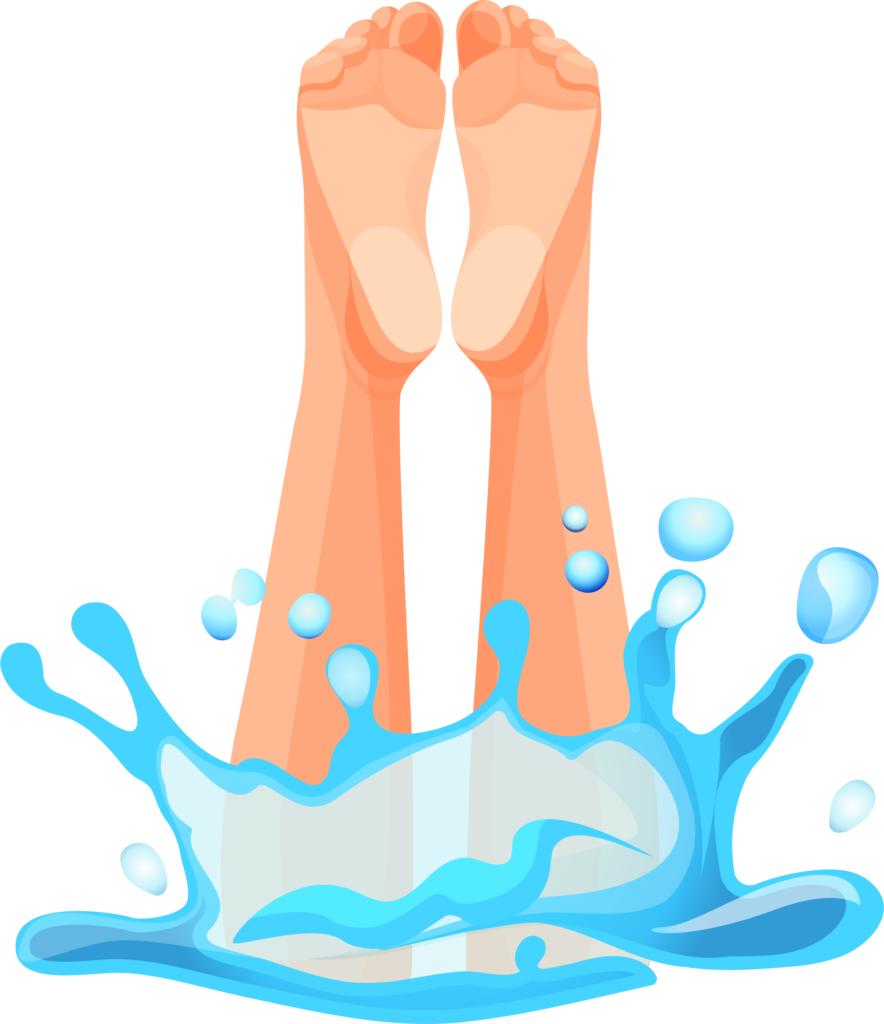
5 Pool Exercises for a Full-Body Workout
Looking for a break from your usual fitness routine? Dive into aquatic exercise! Exercising in water can provide a great full-body workout without some of the drawbacks of land-based exercises.
1. Walk in water. Walking in water is a good exercise to start off with as it helps you get a feeling for how you can create resistance. It targets your arms, core, and lower body. Keep your arms at your side, in the water, and move them as you walk. Engage your core and stand tall.
2. Water arm lifts. This exercise will help strengthen the muscles in your arms. Using foam dumbbells will help add more resistance. Stand in water up to your shoulders. Hold the dumbbells at your side, with your palms facing up. Draw your elbows in close to your torso as you lift your forearms to the height of the water. Rotate your wrists to turn your palms facedown. Lower your arms back to the starting position. Do 1-3 sets of 10-15 reps.
3. Lateral arm lifts. This exercise, which targets your upper body, is also best done with foam dumbbells. Stand in water up to your shoulders. Hold the dumbbells at your side. Raise your arms to the side until they’re level with the water and your shoulders. Lower your arms back down to your sides. Do 1-3 sets of 8-14 repetitions.
4. Back wall glide. This exercise helps to activate the muscles in your core and lower body. Hold onto the pool ledge, tuck your knees into your chest, and press your feet into the wall. Push off from the wall and float on your back as far as you can. Draw your knees into your chest, press your feet down to the bottom of the pool, and run back to the wall. Continue this exercise for 5-10 minutes.
5. Leg kicks. This exercise works the muscles in your core and legs. Use ankle weights to make it more challenging. Hold onto the pool ledge or hold a kickboard. Alternate flutter kicking, scissor kicking, breaststroke kicking, and dolphin kicking. Do each kick for 1-3 minutes.
Water workouts are an effective way to boost your cardio fitness while strengthening your major muscle groups, but as with any new exercise program, always speak to your doctor first. The Beyond Therapy and Wellness physical therapists would be happy to meet with you to see if aquatic exercise is right for you!
Our Patients Get Great Results
“Beyond Therapy and Wellness has helped so much. Lina has done a great job and is very professional. I feel so much better. The techniques taught there could continue way beyond the allotted 6 weeks. The cupping has helped with the abdominal pain I’ve had for so long. They open on time and all the staff is extremely friendly. I’ve never had a long wait. I arrive on time for my appointments and I am seen on time. I appreciate that promptness.”
-Angela J.
Meet Our Team

Dr. Kristi Plunk
PT, DPT, WCS, CLT

Dr. Kirstein Parikh
PT, DPT

Dr. Lina Paz
PT, DPT

Stephanie Irizarry
PT, MSPT, PRC, CLT-Lana, PRC

Teagan Lamkin
PTA, CLT, LMT



Mecca Lenamond
Office Manager / Billing Manager